
Living in Midtown Vs. Downtown
TL;DR – When comparing Midtown vs. Downtown Atlanta, Midtown offers convenient access to arts, parks, restaurants, and nightlife, while Downtown places renters near major attractions, government offices, sports venues, and convention destinations. The right Atlanta neighborhood depends on your commute, lifestyle priorities, and preferred surroundings.
Overview of Midtown Atlanta Vs. Downtown Atlanta
Geographically, Midtown Atlanta and Downtown Atlanta lie in close proximity, and while both neighborhoods present popular options for residents who love a metropolitan hub, they also maintain their own distinct character. Locals recognize Midtown as a cool, trendy place with lots to do. Aside from the booming commerce, you’ll see thousands of people living, dining, and playing in one of Atlanta’s most walkable neighborhoods. Downtown Atlanta serves as a business, government, and tourist center. With downtown’s abundant attractions and activities, it’s easy to stay busy all day.
Despite some long-lingering negative sentiments about Downtown Atlanta, this central neighborhood actually underwent some massive changes in the 1990s as the city prepared to host the Olympics, and revitalization efforts continue to this day. Sure, COVID-19 emptied out office buildings for a while, and Downtown struggled in the same ways that all major US cities did (and still do), but as travel continues to rebound and after hosting several games for the FIFA World Cup in 2026, related new development will bring continued growth. Even now, Downtown Atlanta’s residential population grows at a rate of about 1.7% annually, so it changes more and more every year. Thus, even though many locals flock to Midtown Atlanta, it is worth exploring Downtown as well.
That said, to help you better understand these two neighborhoods, we surveyed our team of Atlanta Locals to give you the updated scoop on living in Midtown vs. Downtown Atlanta.
Feeling overwhelmed with your move to Atlanta? Get a free apartment locator to help with your move!
Related: Best Apartment Coworking Spaces in Atlanta
What Is Living in Midtown Atlanta Like?
The hip and buzzing Midtown Atlanta, a neighborhood just north of Downtown, displays newer, but still tall buildings. Its population of 29,500 rivals Downtown’s 34,000, and the skyline views of Downtown from Midtown establish an unmistakably urban scene.
Midtown Atlanta is rightly known for:
• Ultra-luxury high-rise apartment buildings with incredible city skyline views;
• Serving as “The Heart of the Arts,” thanks to the High Museum of Art, the Fox Theatre, and the Woodruff Arts Center;
• Urban green spaces, such as Piedmont Park and the Beltline;
• Hip restaurants, boutique shopping, and happening nightlife;
• A full bus and subway service;
• Its winning combo of neighborhood feel and convenient, walkable urban living.
Midtown continues to grow quickly, with several business and residential construction projects in progress. So, whether you plan to move into a new apartment or choose a place for a dinner date, you can’t go wrong with this lively neighborhood.
Atlanta river with Downtown Atlanta buildings
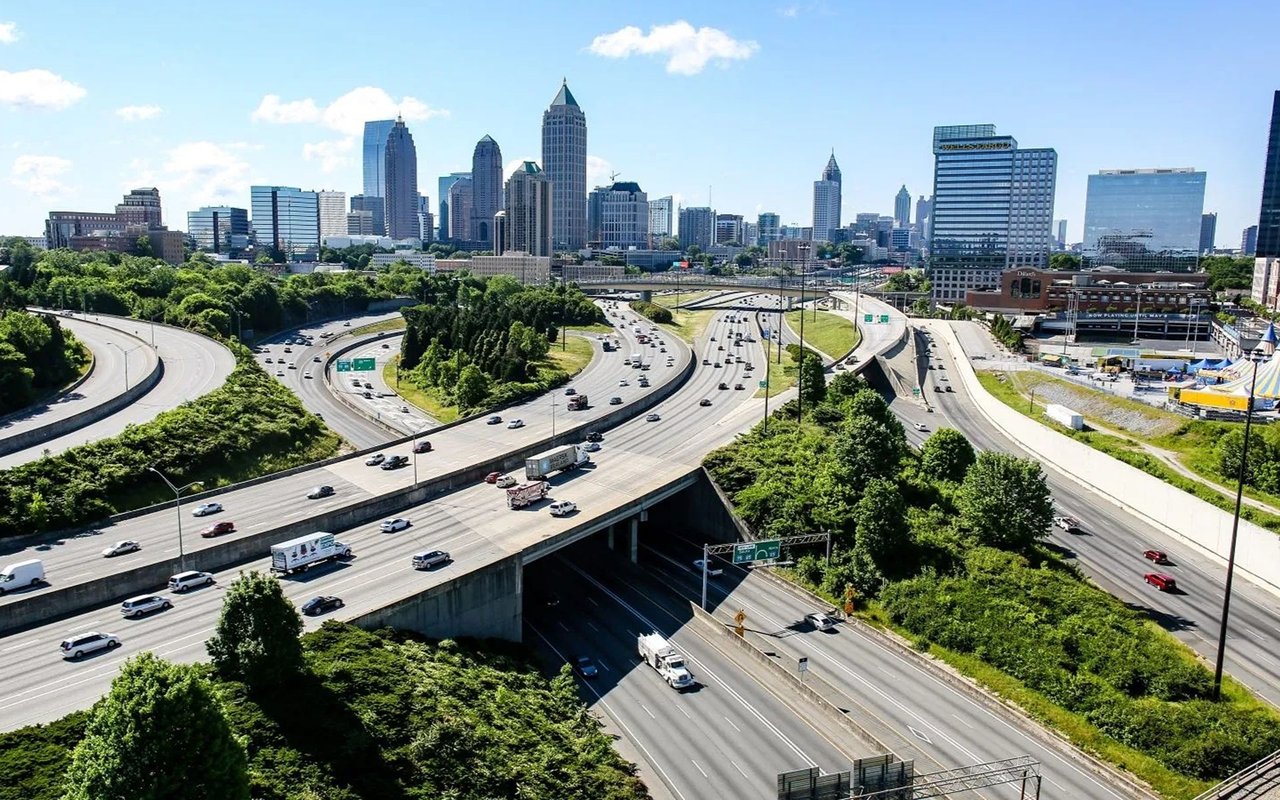
Aerial View of Downtown Atlanta
Midtown Vs. Downtown Infographic
What Is Living in Downtown Atlanta, Georgia Like?
Downtown Atlanta remains the place for business headquarters, government operations, and tourist attractions. It houses the gold-domed State Capitol, along with city, county, and federal government facilities.
On the business end, big-name brands station themselves here as well, including Coca-Cola, AmericasMart, and the Georgia World Congress Center, to name a few. Downtown bustles constantly with trade shows, conventions, and day-to-day business.
But, we can’t forget the attractions. You could spend days exploring the neighborhood like a tourist at these places:
• Georgia Aquarium
• The CTR, formerly CNN Center
• World of Coca-Cola
• College Football Hall of Fame
• Children’s Museum of Atlanta
• Centennial Olympic Park
• Mercedes Benz Stadium
• State Farm Arena
Changes in Downtown Atlanta, Georgia
But, what about the atmosphere and quality of life?
Well, Downtown continues to evolve. In 2017, the Atlanta Downtown Improvement District initiated a massive revitalization plan that has changed the entire face of Downtown. Take Woodruff Park, for example. For years it was full of trash and waste, and it wasn’t, frankly, a pleasant or safe place to go.
However, the city invested in numerous clean-ups, repairs, landscaping, and a sculptural playground. Now, you’ll see workers on lunch break, GSU students, and tourists enjoying the outdoor space. The park hosts festivals, events, and weekly exercise classes. Its remarkable makeover reflects the spirit of transformation happening all over Downtown.
Downtown Atlanta Revitalization
Here are some of the implemented and planned changes for Downtown:
Transportation: Downtown has always provided MARTA access, but not necessarily last-mile connectivity. However, in 2014, the Atlanta Streetcar started running on a 2.7-mile loop, connecting Centennial Olympic Park with the Martin Luther King, Jr. National Historic Site and nearby neighborhoods. For a more physically active option, you can also rent bikes or scooters along the roads to speed up your walk.
Shopping and Restaurants: While you will see some new construction Downtown, adaptive reuse happens a lot. For example, the Peachtree Center‘s plaza and three-story retail center rebranded as “The Hub.” The courtyard became a town square, and new dining and retail options moved into this Peachtree Street location.
Residential: Think Victorian townhomes, apartment skyscrapers, and trendy converted lofts. The Downtown neighborhoods are revitalizing their options and creating a community feel.
The Stitch: Perhaps Atlanta’s most ambitious project, The Stitch consists of a planned ¾ mile platform over the massive I-75 and I-85 highway connector that runs through Downtown. This project, designed to connect multiple neighborhoods with a “stitch” Downtown, will create 17 acres of additional business, retail, residential, and green spaces.
To explore more of the recent and planned changes to Downtown, you can use #PLANDOWNTOWNATL to check out the 2017 Downtown Atlanta Master Plan that includes revitalization for all areas of Downtown life.
Neighborhood Comparison
Comparison Midtown Atlanta Downtown Atlanta
Overall character A mixed-use district centered on arts, offices, restaurants, parks, and residential towers Atlanta’s civic, convention, tourism, university, sports, and entertainment center
Major attractions High Museum of Art, Fox Theatre, Woodruff Arts Center, and Piedmont Park Georgia Aquarium, World of Coca-Cola, College Football Hall of Fame, and Children’s Museum of Atlanta
Parks and outdoor spaces Piedmont Park and convenient access to the Atlanta BeltLine Eastside Trail Centennial Olympic Park, Woodruff Park, and the planned 17-acre Stitch
Dining and entertainment Restaurants, bars, theaters, museums, and cultural programming throughout the district Restaurants and entertainment near Centennial Olympic Park, Peachtree Center, Sweet Auburn, sports venues, and The CTR
Sports and events Convenient access to festivals, performances, and Piedmont Park events Mercedes-Benz Stadium, State Farm Arena, and the Georgia World Congress Center
Public transportation Served by the Midtown and Arts Center MARTA rail stations, plus multiple bus routes Served by several MARTA rail stations, including Five Points and Peachtree Center, plus the Atlanta Streetcar
Apartment landscape Modern high-rises, luxury apartment communities, condominiums, and mixed-use developments Historic conversions, modern apartment towers, condominiums, and new residential projects
Development activity Continued residential and mixed-use growth near Midtown’s cultural and employment centers Major investment in Centennial Yards, South Downtown, The Stitch, and adaptive-reuse projects
Daily activity Often active throughout the day and evening because of its residential, office, dining, and cultural mix Activity frequently centers on business hours, conventions, university schedules, attractions, games, and major events
Consider living here if… You prioritize access to parks, arts institutions, restaurants, and a mixed residential-commercial setting You prioritize access to major attractions, sporting events, conventions, government offices, or Georgia State University
Related: Moving from NYC to Atlanta
How Do Commutes Compare in Midtown Vs. Downtown Atlanta?
Your exact starting point and destination matter more than the neighborhood label. Before choosing between Midtown and Downtown Atlanta, compare the trip from each prospective apartment to your workplace, including the walk to transit, waiting time, transfers, and the final stretch to your office.
Midtown’s North Avenue, Midtown, and Arts Center stations sit along MARTA’s Red and Gold rail corridor. Downtown offers access to that corridor through stations such as Peachtree Center, while Five Points connects north-south and east-west rail travel. Depending on your destination, living near the right station could eliminate a transfer or shorten your walk. Check MARTA’s rail map when comparing addresses.
Frequent flyers can also consider proximity to airport-bound trains. MARTA’s Airport Station connects directly to the Domestic Terminal at Hartsfield-Jackson Atlanta International Airport. Allow additional time if your airline requires check-in at the International Terminal.
Prefer driving? Test your commute during your actual travel hours, including the time needed to leave the apartment garage and park at your destination. A short distance on a map doesn’t always translate into a short morning.
Can You Handle Everyday Errands Without a Car?
Both neighborhoods offer opportunities to combine walking, transit, and delivery services, but convenience varies from one address to another. A nearby coffee shop makes mornings pleasant; a practical grocery route makes the rest of the week easier.
In Midtown, Whole Foods Market’s Atlanta Midtown store operates at 22 14th Street NW. Its grocery selection, prepared foods, and pickup and delivery options give renters several ways to manage their shopping. Check the walking route from your prospective apartment rather than assuming every Midtown building sits around the corner.
Downtown shoppers can visit Azalea Fresh Market at 25 Peachtree Street NW for groceries and prepared food. Over in Sweet Auburn, The Municipal Market at 209 Edgewood Avenue SE brings together produce vendors, butchers, seafood merchants, and eateries. Individual merchants may follow different schedules, and the market closes on Sundays.
Before signing a lease, map your usual grocery store, pharmacy, fitness destination, and other recurring stops. Walk the routes, check business hours, and consider how you would transport a week’s worth of groceries. If you expect to rely on deliveries, ask the building about grocery drop-offs, access instructions, and refrigerated storage.
How Should You Compare Apartment Costs in Midtown and Downtown?
The more affordable choice depends on the specific apartment and the expenses attached to it. Compare units with similar bedroom counts, square footage, lease lengths, and move-in dates before deciding which neighborhood offers better value for your budget.
Request a written breakdown that separates:
Base rent and any promotional rent credits.
Required recurring charges, including applicable amenity, technology, trash, or service fees.
Parking, utilities, internet, and optional services.
Application fees, administrative fees, deposits, and other upfront costs.
A leasing special deserves a closer look, too. Ask how the credit gets applied and what you will actually owe each month. A lower advertised average after concessions may differ from the payment required during months without a credit. AptAmigo’s apartment touring checklist can help you organize these questions.
Then consider expenses beyond the building. Compare your expected parking, transit, rideshare, and delivery spending at each address. An apartment that simplifies your commute or puts regular errands within walking distance might justify a higher rent, provided the complete budget works for you.
What Should You Check Before Choosing a Specific Building?
Once you narrow your search to Midtown or Downtown, spend time evaluating the block around each apartment. Visit during a weekday commute and an evening or weekend, then notice how traffic, street activity, and noise change.
Downtown renters considering buildings near Mercedes-Benz Stadium should review the event calendar and ask management about garage access, guest parking, and rideshare pickup during major events. In Midtown, check the neighborhood events calendar for activities near your prospective home. Your experience will depend on the building’s location and your apartment’s orientation.
During the tour, listen from inside the actual unit with the windows closed. Ask which direction it faces, whether nearby construction could affect your daily routine, and whether additional development could change the view. Test the mobile signal, check the available internet providers, and picture where you would work from home.
Finally, weigh proposed improvements against your lease timeline. Projects such as The Stitch describe a future vision for Downtown; confirm what you can actually use during your tenancy. Choosing the right apartment means understanding the everyday experience behind the skyline photo.
Find Your Dream Atlanta, Georgia Apartment
There you have it, the updated inside scoop on Midtown Atlanta vs. Downtown Atlanta. This guide should help you decide where to live in Atlanta if you can’t choose between the two. For even more help, turn to AptAmigo, an apartment locating service designed to pair you with your dream apartment. Reach out and let us know your wants and needs for your new place, and we’ll set up a day of tours for the buildings we know would fit you perfectly. We will even join you on tour day so that you have someone there while you make such an important decision.